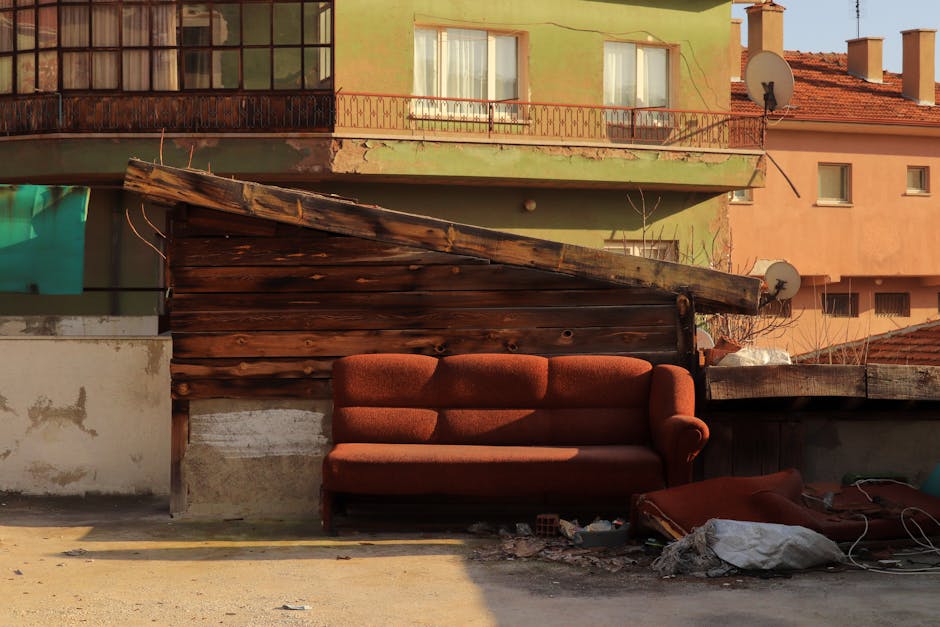
Broken sofa disposal on Kingston Council streets: quick fixes
Finding a broken sofa dumped on a Kingston street can be a nuisance, a safety risk, and a bit of an eyesore all at once. If you are trying to deal with Broken sofa disposal on Kingston Council streets: quick fixes, the good news is that there are sensible, fast ways to handle it without making the problem worse. Whether the sofa is outside your own property, left by a neighbour, or blocking a pavement, the right approach depends on what the item is, who owns it, and how quickly it needs moving. This guide breaks down the quickest practical fixes, the common pitfalls, and the safest way to get a bulky, damaged sofa cleared with the least stress.
You will also find a realistic step-by-step process, a comparison of disposal options, and a checklist you can use straight away. Truth be told, most people just want the thing gone before it becomes a bigger headache. Fair enough.
Why Broken sofa disposal on Kingston Council streets: quick fixes Matters
A broken sofa on a public street is not just a messy object waiting to be removed. It can block pedestrians, attract fly-tipping, create trip hazards, and make a whole corner feel neglected. On busier Kingston streets, even a small delay can turn into an awkward scene: the arm is torn, stuffing is visible, rain has started to soak the fabric, and somebody has moved it half onto the pavement. That is when a quick fix stops being convenient and starts being necessary.
There is also the practical side. Sofas are bulky waste, and once they are damaged they are harder to shift, harder to handle safely, and more awkward to break down for transport. If you leave the job too long, the item can get wetter, heavier, and more difficult to move. Let's face it, a sofa that has sat outside overnight is rarely better in the morning.
The issue matters because it affects more than one person. Nearby residents, delivery drivers, shoppers, landlords, tenants, and property managers all feel the impact. In a local setting like Kingston, where residential streets, flats, and mixed-use roads often sit close together, a fast response usually saves time later. It also helps avoid complaints, repeated call-backs, and that slightly dreaded feeling of "who is actually dealing with this?"
If you are managing repeated furniture issues, it can help to look at broader removal support too, such as furniture disposal, furniture clearance, or even a wider waste removal service when the sofa is only one part of a bigger job.
How Broken sofa disposal on Kingston Council streets: quick fixes Works
The "quick fix" part usually means one of three things: move the sofa safely to an authorised collection point, arrange a proper uplift as fast as possible, or dismantle it enough to make removal easier. Which route works best depends on where the sofa is, how damaged it is, and whether it is your responsibility.
In practical terms, the process often looks like this:
- Check whether the sofa is on private land, a pavement edge, or directly on the street.
- Identify whether it still has safe handling points or whether it needs partial dismantling.
- Take clear photos if you need to report the item or show its condition.
- Decide whether the sofa can be moved without risking injury or damage.
- Choose a disposal route: council collection, private clearance, reuse donation if suitable, or broken-down removal.
If the sofa is on the street and appears to be fly-tipped or abandoned, the fastest response is usually to report it to the relevant local authority channel and avoid moving it yourself unless you are sure it is safe and permitted. That is especially true if the item is soaked, mouldy, contaminated, or infested. Not glamorous, but important.
If the sofa is yours and it has simply been moved outside while you wait for collection, a quick fix may be to secure it, keep it dry if possible, and book a proper pickup. A broken sofa can sometimes be stripped into smaller parts, which makes loading easier and safer. A lot depends on the frame, springs, and fabric condition. One person's "easy lift" is another person's back trouble waiting to happen.
Key Benefits and Practical Advantages
Sorting sofa disposal quickly has benefits that go beyond clearing visual clutter. The first is obvious: you get your space back. The second is less obvious but arguably more valuable: you reduce the chance of the item becoming a wider nuisance.
- Less trip risk: a sofa left partly on the pavement can cause avoidable accidents.
- Cleaner street appearance: rubbish tends to attract more rubbish, unfortunately.
- Faster end to the problem: prompt action prevents the sofa from sitting there for days.
- Safer handling: moving or dismantling early is usually easier than waiting until the item deteriorates.
- Better chance of reuse: if the sofa is only partly damaged, early assessment can save salvageable materials.
There is also a mental benefit. A broken sofa on a street can feel oddly heavy when you keep seeing it outside your window. Once the removal plan is in place, the whole situation tends to calm down. Small thing, maybe. But it matters.
For landlords, property managers, and local businesses, a quick response can also protect reputation. If a sofa is left outside a building entrance or shopfront, people notice. If you need a more structured clearance approach for ongoing property moves, flat clearance, house clearance, or home clearance may be more suitable than trying to solve each item one by one.
Who This Is For and When It Makes Sense
This topic is relevant to a fairly wide group. You might be a tenant dealing with a sofa that has finally given up, a landlord clearing a vacated property, or a homeowner who has dragged a worn-out couch outside while waiting for the right collection. It can also apply to people who have found a dumped sofa on the street and want to know what to do next.
It makes sense when:
- the sofa is broken, torn, damp, or unsafe to move as a complete item
- the item is too heavy or awkward for standard household bins or normal lifting
- you need it gone quickly, but you do not want to risk an unsafe DIY move
- the sofa is one part of a larger clear-out, such as after a move or renovation
- you are trying to avoid leaving bulky waste exposed to the weather
It is also relevant if the item sits awkwardly in shared access spaces. In a block of flats, for example, one broken sofa can create friction very quickly because everyone uses the same route. That is where a calm, well-timed clearance plan saves a lot of awkward conversations in the hallway.
If your job is part of a bigger property tidy-up, you may also want to explore garage clearance, loft clearance, or house clearance if multiple bulky items need going at once.
Step-by-Step Guidance
Here is a practical process you can follow without overcomplicating things.
1. Make the area safe
Keep children, pets, and passers-by away from the sofa if it is already on the street or pavement edge. If the item has exposed staples, broken timber, sharp springs, or glass in the frame, do not drag it casually. That is how minor problems become annoying injuries.
2. Assess ownership and location
If it is outside your property, ask whether the sofa belongs to you, a neighbour, or looks like abandoned waste. The answer changes the next step. Private land is one thing. Public highway is another. If you are not sure, err on the side of caution.
3. Check whether the sofa can be dismantled
Sometimes removing the feet, arms, or cushions can make the sofa much easier to transport. If you do this, keep fixings in a labelled bag and avoid forcing tools into brittle wood. A bit of patience here saves a lot of cursing later.
4. Protect floors and access points
If the sofa has to pass through a hallway, lift route, or communal entrance, use covers or cardboard where needed. Wet fabric can leave marks, and broken frames can snag walls. You do not want a disposal job turning into a repair job.
5. Choose the fastest legitimate disposal route
Depending on the situation, that might be a council collection, a private furniture pickup, or a broader clearance booking. If the sofa is just one item among several, using a service that handles multiple bulky objects in one visit is often more efficient than piecing it together.
6. Confirm where the sofa is going
Not every sofa should be treated the same. A usable one may be suitable for onward reuse, while a heavily damaged item may need material recovery or disposal. When you are making decisions quickly, this is where a little judgment helps. Not everything old is waste, and not everything broken is repairable.
7. Follow up if it was dumped
If the sofa appears to have been fly-tipped on Kingston streets, document it and report it through the proper local route. Do not assume someone else has done it. In busy neighbourhoods, "someone will sort it" can mean "nobody sorts it."
Expert Tips for Better Results
In our experience, the quickest sofa removals are the ones planned with the actual shape of the sofa in mind. Sounds obvious, but people often focus on size only. A bulky two-seater with a slim frame can be easier to move than a compact sofa bed with a stubborn mechanism and hidden metal parts.
Tip 1: Check access before lifting. Measure doorways, stair turns, lifts, and porch widths. A sofa that looks manageable in the lounge may become a different beast at the front door.
Tip 2: Strip the soft parts first if needed. Cushions, throws, and removable covers reduce bulk and make the main body easier to handle.
Tip 3: Keep the weather in mind. A wet sofa is heavier, messier, and more likely to shed debris. If rain is due later in the day, a morning move can be a smart little win.
Tip 4: Use the right service for the scale of the job. If you have one broken sofa, you may not need a full property clearance. But if that sofa sits alongside other old furniture, one visit often makes more sense. That is where furniture clearance can be a neat fit.
Tip 5: Don't wait for the item to collapse further. Once the internal springs start popping through, handling becomes trickier. Better to act while the frame still has some shape.
Expert summary: The fastest solution is rarely the most hurried one. It is usually the one that balances safety, access, and the right disposal route. A few minutes of planning often saves an hour of back-and-forth.
Common Mistakes to Avoid
People tend to make the same handful of mistakes with broken sofa disposal. None of them are dramatic on their own, but together they can cause delays, damaged property, or a job that becomes more expensive than it needed to be.
- Leaving the sofa half on the pavement: this invites complaints and can create obstruction issues.
- Dragging it without checking for sharp damage: broken springs and timber edges can catch skin and flooring.
- Assuming all sofas can be treated the same: sofa beds, recliners, and modular pieces are different animals.
- Not separating cushions and loose parts: this slows loading and can make the item look worse while it waits outside.
- Booking the wrong type of clearance: a one-item pickup is not always enough if the property has more waste than expected.
- Ignoring responsibility: if the sofa is on public land, do not just move it and hope for the best unless you know that is the right approach.
One mildly annoying mistake we see often is people putting a sofa outside "just for tonight" and then forgetting it sits where everyone can see it. By day three, it feels like it has always been there. And nobody wants that.
Tools, Resources and Recommendations
You do not need specialist equipment for every sofa disposal job, but having a few basic tools on hand makes the process less messy and much safer.
- Work gloves: useful for handling torn fabric, splinters, and dirty upholstery.
- Basic hand tools: a screwdriver or wrench can help remove feet, arms, or loose fittings.
- Heavy-duty bags: handy for screws, clips, and detachable soft furnishings.
- Protective floor coverings: cardboard or blankets help protect hallways and door frames.
- Ratchet straps or tie-downs: useful if the sofa is being moved in a vehicle and needs stabilising.
For larger or recurring jobs, it can also help to compare services by what they include, how quickly they can attend, and whether they handle heavier furniture responsibly. If disposal is part of a bigger project, you may want to look at builders waste clearance for renovation-related debris, or office clearance if the sofa is part of a workplace reset.
Practical recommendation: if the sofa is dirty, soaked, or heavily damaged, keep your expectations simple. Reuse may not be realistic. That is okay. Safe removal is the priority, and then responsible processing after that.
Law, Compliance, Standards, or Best Practice
When dealing with bulky waste on streets, the key thing is to stay on the right side of local rules and general UK waste best practice. You do not need a law degree to make a sensible decision, but you do need to avoid guessing.
As a rule of thumb, do not place furniture on public land unless it is being collected through a legitimate and agreed process. If the sofa is abandoned, fly-tipped, or left in a public area, the safest response is to report it rather than move it casually without checking the facts. If the item is on private property, the owner or occupier usually needs to arrange the removal.
Best practice also means:
- using a licensed and responsible clearance route for waste
- separating reusable furniture from genuine waste where practical
- avoiding unsafe manual lifting
- keeping shared access routes clear
- handling contaminated or damp items cautiously
For households and businesses that want extra reassurance, it is worth choosing a provider that is clear about its operational standards. Pages such as health and safety policy, insurance and safety, and recycling and sustainability can be useful signals when you are comparing options.
There is a simple rule here: if there is any doubt about ownership, location, or safe handling, slow down enough to choose the legitimate route. That is the cleaner outcome, literally and practically.
Options, Methods, or Comparison Table
Different sofa disposal methods suit different situations. A quick comparison can help you decide without overthinking it.
| Method | Best for | Speed | Pros | Watch-outs |
|---|---|---|---|---|
| Council-style bulky waste process | Standard household furniture when collection is available | Moderate | Structured and familiar | May not suit urgent street-side issues |
| Private furniture clearance | Broken, awkward, or time-sensitive items | Fast | Convenient, flexible, often same-day or near-term | Needs careful booking and clear item description |
| DIY dismantling and transport | Manageable items with good access and safe handling | Variable | Can reduce volume and help with access | Riskier if the sofa is damaged or heavy |
| Reuse or donation route | Furniture that is still in decent condition | Variable | Good for items with remaining life | Not suitable for genuinely broken sofas |
For many people, the private clearance route is the most practical if the sofa is already broken and sitting awkwardly on a Kingston street or just outside a property. It is usually the least fiddly. If there are multiple items, the value rises quickly because you only handle the job once.
Case Study or Real-World Example
Picture a flat-share on a wet Thursday evening. A sofa has split along the arm, the seat padding is sagging, and the legs are no longer stable. It has been moved into a front area, but there is no obvious plan for tomorrow. People are stepping around it, the fabric is damp, and everyone is a bit tired. Typical, really.
The quickest sensible fix in that situation is not to leave it out and hope for a miracle. The better route is to assess whether it can be safely broken down into smaller sections, remove loose cushions and fittings, and arrange a prompt furniture collection. If the sofa is too damaged to save, the aim becomes rapid removal and responsible disposal. If other items are going too, a broader flat clearance may be more efficient than handling one object at a time.
What usually makes the difference is clarity. One person takes photos. Another checks the access route. Someone books the pickup. The sofa goes, the hallway clears, and the whole place feels better by the end of the day. Nothing fancy. Just organised.
Practical Checklist
Use this quick checklist before you move or book removal for a broken sofa.
- Confirm whether the sofa is on private land or a public street
- Check if it looks abandoned, fly-tipped, or simply awaiting collection
- Inspect for sharp edges, springs, mould, dampness, or infestation
- Remove cushions, throws, and loose parts
- Measure access routes if the item needs to pass through tight spaces
- Decide whether dismantling is sensible and safe
- Choose the most suitable disposal route for the item's condition
- Keep the area clear while the sofa is waiting for collection
- Take photos if you need to report the item
- Follow up until the sofa is fully removed
If the sofa is part of a bigger property clear-out, it may be worth bundling the job with garage clearance or furniture clearance so the whole place gets dealt with in one go.
Conclusion
Broken sofa disposal on Kingston Council streets does not need to become a messy ordeal. The quick wins are straightforward: keep people safe, work out who is responsible, choose the right removal route, and avoid leaving the item exposed longer than necessary. Most delays happen because people hesitate, not because the sofa is unusually difficult. Once you take the first proper step, the rest tends to follow.
Whether you are dealing with one damaged couch, a dumped item outside a property, or a larger clearance job that just happens to start with the sofa, the goal is the same: remove it cleanly, legally, and without unnecessary fuss. That's the real quick fix.
Get a free quote today and see how much you can save.
And if you are still staring at the thing by the front gate, take a breath. It's fixable. Honestly, most of these jobs are.
Frequently Asked Questions
What is the quickest way to deal with a broken sofa on a Kingston street?
The quickest safe option is usually to identify whether it is on public land or private property, then arrange the most suitable legitimate collection. If the sofa is abandoned on the street, report it rather than moving it blindly.
Can I just leave a broken sofa outside for collection?
Only if it is part of an agreed collection process and left in the correct place. Leaving bulky furniture on the street without proper arrangements can create obstruction, complaints, and potential fly-tipping issues.
Should I dismantle a broken sofa before disposal?
Sometimes, yes. If it is safe to do so, removing cushions, feet, or arms can make the item easier to move. But do not force brittle timber or expose sharp springs without proper care.
What if the sofa is wet, mouldy, or infested?
Treat it cautiously. Wet or contaminated furniture can be heavier, harder to handle, and less suitable for reuse. In those cases, fast removal and safe handling matter more than trying to salvage it.
Is council collection always the best option?
Not always. Council routes can suit standard bulky waste, but if the sofa is urgent, damaged, or part of a larger clear-out, a private clearance option may be more practical.
What should I do if the sofa appears to be fly-tipped?
Take a photo if appropriate, avoid moving it unless it is safe and permitted, and report it through the correct local route. That is usually the cleanest approach.
How do I know if the sofa can be reused?
If the frame is stable, the upholstery is clean enough, and there is no major structural damage, it may still have reuse potential. If the springs are exposed or the frame is broken, reuse is unlikely.
What is the safest way to move a heavy sofa?
Use two people where possible, check the route first, wear gloves, and avoid twisting under load. If the sofa is awkward or damaged, it is often safer to use a clearance service.
How long should a broken sofa be left outside?
As little time as possible. The longer it stays out, the more likely it is to get wet, dirty, or complained about. Quick action tends to reduce hassle later.
Can I include a broken sofa with other furniture in one booking?
Yes, and that often makes sense. If you have more than one bulky item, a wider furniture or house clearance can be more efficient than booking separate removals.
What if I rent the property and the sofa is not mine?
Tell the landlord, letting agent, or whoever is responsible for the item as soon as possible. Keep a record of what you reported and when, because that helps avoid confusion later.
How can I avoid this happening again?
Check furniture condition before it reaches the point of failure, plan disposal early, and avoid leaving bulky items outside "temporarily" unless a real collection is already arranged. Prevention is boring, but useful.
For extra reassurance on service standards and responsible handling, you can also review the company's about us information and pricing and quotes details when deciding your next step.