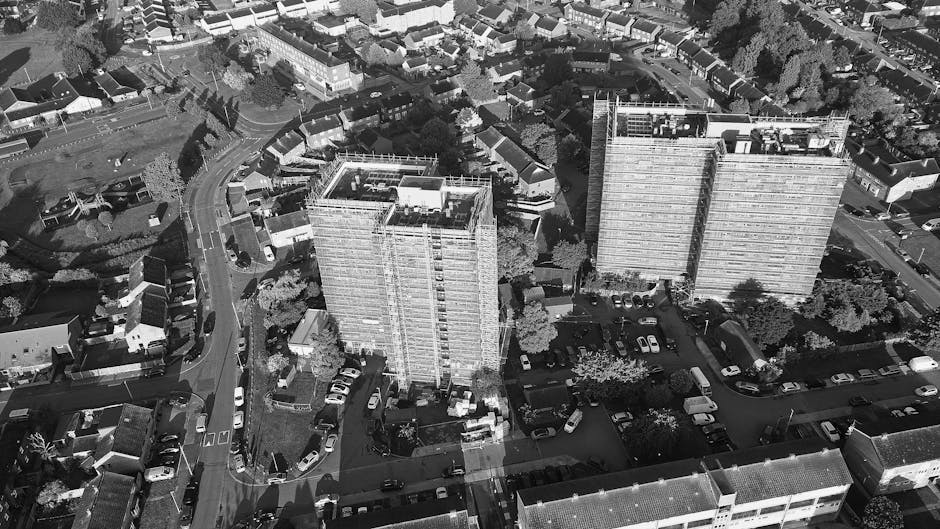
Victoria Road flats: efficient clearance for tight access
Clearing a flat sounds straightforward until you meet the real-world stuff: narrow stairwells, awkward landings, shared entrances, parking restrictions, and furniture that looked perfectly manageable in the lounge but suddenly feels enormous on the way out. That is where Victoria Road flats: efficient clearance for tight access becomes a proper planning job, not just a lifting job.
If you are dealing with a top-floor flat, a converted property, or a block where access is tight from start to finish, the difference between a smooth clearance and a frustrating one usually comes down to preparation. The right approach saves time, reduces damage risk, and makes the whole process far less stressful for everyone involved. Truth be told, a lot of the difficulty is avoidable once you know what to look for.
This guide explains how tight-access flat clearance works, what to expect, where the common snags are, and how to plan it properly. It also covers safety, compliance, practical tips, and a realistic step-by-step process you can use whether you are clearing one room or an entire flat.
Why Victoria Road flats: efficient clearance for tight access Matters
Tight-access clearance is not just a convenience issue. In flats, access often shapes the entire job. A sofa that would be easy to move from a ground-floor house may need careful turning, lifting, and route planning in a Victorian conversion or a modern block with a narrow core. On a road like Victoria Road, where local layouts and parking conditions can vary from one building to the next, a clearance team has to think ahead.
Why does that matter? Because poor access planning leads to delays, accidental damage, frustrated neighbours, and sometimes unsafe lifting. A hallway with a sharp turn or a stairwell with limited headroom can turn an otherwise simple flat clearance into a puzzle. And if there are bulky items, mixed waste, or fragile belongings, the stakes rise quickly.
Efficient clearance is really about doing a few things well: measuring the route, protecting surfaces, separating items sensibly, and using the right handling method for each object. That sounds simple. It rarely is. But when it is done properly, the whole job feels calmer, faster, and cleaner.
For many residents, the issue is emotional as well as practical. A flat clearance may follow a move, a refurbishment, a bereavement, or a change in tenancy. You do not need extra hassle on top of that. A thoughtful service approach can take a genuine load off your mind.
How Victoria Road flats: efficient clearance for tight access Works
The best tight-access flat clearance starts before anyone picks up a single item. The first step is usually a quick assessment of what needs clearing and how the items will leave the property. That includes the stairwell, lift, doorway widths, corners, communal areas, and whether parking or loading space is available outside.
In practical terms, an efficient clearance follows a fairly simple pattern:
- Survey the access route. Check stairs, lifts, entrance widths, and any awkward bends or low ceilings.
- Identify bulky items. Sofas, wardrobes, white goods, beds, mattresses, and filing cabinets often need the most planning.
- Decide what stays and what goes. A clear sorting decision avoids confusion on the day.
- Protect the route. Hallways, banisters, floors, and door frames may need covering or padding.
- Remove items in the best order. The largest pieces usually go first, unless the route requires a different sequence.
- Separate reusable, recyclable, and disposal items. This keeps the clearance tidy and more environmentally responsible.
Sometimes the clever part is not force, but sequence. For example, if a wardrobe cannot turn in one piece, it may be safer to dismantle it in the flat rather than risk scraping walls on the stairs. That kind of judgment is what makes a clearance genuinely efficient.
Some teams will also use specialist moving aids such as sack trucks, furniture sliders, lifting straps, or protective blankets. These are not glamorous tools, obviously, but they do a lot of the heavy lifting behind the scenes.
If your flat clearance involves mixed household items rather than only one category, it can help to look at related services such as flat clearance, furniture clearance, or broader home clearance support depending on the scale of the job.
Key Benefits and Practical Advantages
There are some obvious benefits, but the real value is often in the less obvious ones. A well-managed clearance in a tight-access flat can prevent small problems from becoming expensive ones.
- Less risk of damage: Walls, flooring, doors, and shared hallways are protected more effectively.
- Faster completion: Planning the route and sorting items in advance cuts delays.
- Reduced stress: You are not trying to solve access problems on the spot.
- Better neighbour relations: Less disruption in communal areas keeps things civil.
- Improved recycling outcomes: Items can be separated properly rather than bundled together.
- Safer lifting: Tight stairs and awkward turns are handled with care, not guesswork.
There is also a practical financial benefit. Efficient planning can reduce labour time and avoid avoidable call-backs. If the quote has been built around real access conditions, there are fewer surprises. That is always a good thing.
For people comparing options, it is worth checking how a company handles transparent pricing, scheduling, and payment. Pages like pricing and quotes and payment and security can give useful reassurance before you book.
Who This Is For and When It Makes Sense
This kind of clearance is a strong fit for anyone living in or managing a flat where access is not generous. That might be a period conversion, a purpose-built block, a second- or third-floor apartment, or a property with a shared entrance and a narrow staircase.
It also makes sense if you are clearing:
- a flat before sale or new tenancy
- an inherited property that needs careful handling
- bulky furniture from a compact apartment
- student accommodation at the end of term
- rooms after a refurbishment or decorating project
- mixed household waste that needs to be removed safely and responsibly
If the flat has no lift, a low bannister, or a communal corridor that is just a bit too snug for comfort, you are in the right territory. To be fair, a lot of London flats fall into this category. It is not unusual. It just needs a careful plan.
For households with broader needs, a service like house clearance may be more appropriate; for heavier waste after renovation, builders waste clearance or waste removal may be the better match.
Step-by-Step Guidance
Here is a practical way to approach a tight-access flat clearance without turning it into a headache.
1. Walk the route first
Start with the path from the flat to the vehicle. Look at door widths, stair turns, lift access, parking distance, and any shared spaces. If possible, take a couple of photos. A slightly awkward stairwell can look fine in person, then suddenly not fine when a wardrobe is halfway through it.
2. Measure the awkward items
Large furniture needs more than a rough estimate. Measure the height, width, and depth of sofas, beds, wardrobes, desks, and appliances. If something looks tight on paper, it usually is.
3. Sort items before the clearance day
Make simple categories: keep, donate, recycle, and dispose. Even if you are not doing a full house clear, a bit of sorting saves time. It also reduces the chance of accidentally sending something away that you meant to keep. Happens more often than people like to admit.
4. Protect surfaces and shared areas
Hallways, skirting boards, lift doors, and stair edges are the most vulnerable spots. Good padding and careful handling matter, especially in buildings where multiple residents use the same access route.
5. Remove bulky items strategically
The removal order should suit the layout. Sometimes it is better to take out the largest item before boxes. Sometimes it is the other way round. The point is to keep the route clear and avoid trapping yourself with an impossible angle at the end.
6. Finish with a clean sweep
Once the main items are out, do a final check for loose rubbish, small hardware, and overlooked pieces behind furniture or under beds. A careful finish gives the space a proper reset.
Expert Tips for Better Results
In our experience, the best tight-access clearances are the ones where the awkward bits are dealt with before they become awkward. That sounds obvious, yet it is exactly where many jobs go sideways.
- Use the building's quiet hours wisely. If you are clearing a flat in a shared block, avoid peak times when neighbours are coming and going.
- Keep doorways free. One blocked doorway can slow the whole job down.
- Dismantle rather than force. A bed frame or wardrobe may be easier to break down than to wrestle down the stairs.
- Label awkward items early. Anything fragile, sharp, or unusually heavy should be identified before moving starts.
- Think about parking before arrival. A long carry from the vehicle can turn a short job into a long one, especially if the weather is miserable. And in London, it often is, at least a bit.
- Ask about recycling. Responsible sorting is not just nice to have. It is part of a good clearance service.
If you are comparing providers, useful trust signals include clear service information, public policies, and a straightforward company background. Pages such as about us, health and safety policy, and insurance and safety can help you judge how seriously a business takes the job.
Common Mistakes to Avoid
Most clearance problems in tight-access flats are predictable. The frustrating part is that they are so predictable, and yet they still happen.
- Assuming everything will fit: It is tempting to think a sofa will "just about" make it. Sometimes it does. Often it does not.
- Not measuring the access route: Furniture dimensions matter, but stair turns and hallway widths matter just as much.
- Leaving sorting until the day itself: That slows things down and creates confusion.
- Ignoring building rules: Some blocks require advance notice, lift booking, or protection of communal areas.
- Overloading one person with decisions: If there are family members, tenants, or landlords involved, agree the plan early.
- Choosing disposal without checking reuse options: Not every item should go straight to waste.
The biggest mistake of all? Underestimating how tiring narrow-stair carrying can be. One trip is manageable. Five or six trips, with a heavy mattress, is a different story entirely.
Tools, Resources and Recommendations
You do not need a warehouse full of equipment to do this properly, but the right tools make a noticeable difference.
| Tool or Resource | Why It Helps | Best Used For |
|---|---|---|
| Furniture blankets | Protects walls, doors, and item surfaces | Large items in narrow corridors |
| Sack truck or trolley | Reduces manual carrying where route allows | Boxes, appliances, lighter furniture |
| Moving straps | Helps with controlled lifting and balance | Bulky items and two-person carries |
| Basic tape measure | Confirms whether items can pass through tight spaces | Pre-clearance planning |
| Protective gloves and footwear | Improves grip and reduces minor injury risk | Any manual handling |
For some clearances, the best resource is simply good communication. A quick call, a few photos, and a clear inventory can save a lot of back-and-forth. If you are unsure how a provider handles collection, sorting, or disposal, it is reasonable to ask before booking.
If the job is part of a wider project, related services like furniture disposal and recycling and sustainability are useful pages to review. For smaller end-of-lot clearances, business waste removal or office clearance may also be relevant if the contents are partly commercial.
Law, Compliance, Standards, or Best Practice
Clearance work in flats needs to be handled with care, especially where waste, lifting, and access to communal areas are involved. The exact legal obligations will depend on the situation, but a sensible provider should work in line with UK best practice for safe handling, waste segregation, and responsible disposal.
In practical terms, that usually means:
- taking reasonable steps to prevent damage or injury
- sorting waste appropriately, rather than treating everything as mixed rubbish
- respecting building rules and neighbours
- using insured and safe methods for manual handling
- disposing of items through appropriate channels
If items include electrical goods, heavy furniture, or materials from refurbishment work, the provider should be careful about how those items are handled and where they are taken. You do not need a lecture on regulation, but you do deserve a service that behaves responsibly. That part matters.
For reassurance, you can also review operational pages such as terms and conditions and the company's privacy policy before requesting a quote or sharing property details.
Options, Methods, or Comparison Table
There is more than one way to clear a tight-access flat. The right method depends on the amount of content, access limitations, time available, and whether the items are reusable or simply need to go.
| Method | Best For | Pros | Watch Outs |
|---|---|---|---|
| Full-service clearance | Mixed contents, limited time, awkward access | Fast, organised, less stress for you | Needs clear instructions and route planning |
| Item-by-item removal | A few bulky pieces | Simple and targeted | Can be slower if items are hard to manoeuvre |
| Partial clearance | Rooms with only selected items to remove | Cost-efficient, less disruption | Requires precise sorting beforehand |
| Dismantle-and-remove | Large furniture in narrow spaces | Makes awkward items manageable | Takes time and care to do safely |
For a compact flat, dismantle-and-remove often wins. For a lightly furnished property, direct removal may be enough. If the flat also contains loft items or storage overflow, a related service like loft clearance can be helpful too.
Case Study or Real-World Example
Picture a typical two-bedroom flat near Victoria Road: second floor, no lift, narrow communal stairs, and a mix of old furniture, a mattress, a small fridge, and several bags of household clutter. Nothing outrageous. Nothing impossible either. But there is a catch: the stairwell turns sharply halfway down, and the landing is just wide enough for one person to pause, not two to pass comfortably.
In a situation like that, the best results usually come from preparation rather than brute strength. The team would first check which items need dismantling, protect the stairs and corners, and bring the bulkiest pieces out in the best order. The mattress might come out first if it blocks the route, while smaller bags are kept back until the main items have gone. If the fridge is awkward, it might need a two-person carry with controlled turns at the landing.
What makes the clearance efficient is not speed on its own. It is the lack of wasted movement. No repeated backtracking, no trying to force a piece through an impossible angle, no guessing. A job like that can feel a lot calmer when everyone knows the plan from the start. And honestly, that calm matters when you are standing in a stairwell with a wardrobe leaning slightly the wrong way.
At the end, the flat is left clear, the access route is undamaged, and the waste is separated responsibly. Simple outcome. Good outcome.
Practical Checklist
Use this checklist before a tight-access flat clearance so the day runs more smoothly.
- Confirm the flat number, floor level, and access route
- Measure large furniture and appliances
- Note any narrow turns, low ceilings, or awkward landings
- Check whether there is a lift and whether it can be used
- Reserve or check parking/loading options if needed
- Sort items into keep, donate, recycle, and dispose
- Remove personal documents or valuables in advance
- Tell neighbours or building management if the property requires notice
- Ask about insurance, waste handling, and recycling
- Have keys, entry codes, and contact details ready on the day
Expert summary: Tight-access flat clearance is easiest when the route is measured, the items are sorted early, and the plan is built around the building, not around wishful thinking. That little bit of care saves a surprising amount of time.
If you want to speak to a team that understands access challenges, you can use the main contact us page to request advice or a quote. It is often the quickest way to turn a messy job into a manageable one.
Get a free quote today and see how much you can save.
Conclusion
Victoria Road flats: efficient clearance for tight access is really about common sense done well. Measure the route, protect the building, sort the items, and choose the removal method that fits the space rather than fighting it. That is the difference between a clearance that feels chaotic and one that feels under control.
Whether you are dealing with one awkward sofa or a full flat of mixed items, the best results come from planning, patience, and a team that understands tight spaces. There is something reassuring about that, actually. When the details are handled properly, the job stops feeling impossible and starts feeling straightforward.
A clear flat is one thing. A clear plan is even better.
Frequently Asked Questions
What does efficient clearance for tight-access flats actually mean?
It means clearing a flat in a way that works with the building's limitations, rather than against them. The focus is on careful route planning, safe lifting, protecting the property, and avoiding delays caused by narrow stairs, tight corners, or limited parking.
Why are Victoria Road flats often tricky to clear?
Many flats in and around Victoria Road can have shared entrances, narrow staircases, awkward turns, or limited loading space. Even if the flat itself is tidy, the access route may require extra care.
Can large furniture be removed from a flat with no lift?
Usually yes, but it depends on the size of the furniture and the layout of the stairwell. Some items can be moved safely as they are, while others may need dismantling first.
Do I need to measure my furniture before booking a clearance?
It is strongly recommended. Measurements help the clearance team judge whether items will fit through doors and stair turns, which makes planning much more accurate.
How long does a tight-access flat clearance take?
There is no fixed answer because it depends on the number of items, the floor level, the access route, and whether furniture needs to be dismantled. A small job may be quick; a larger one with heavy items will naturally take longer.
What should I do before the clearance team arrives?
Remove personal items, separate what you want to keep, and make sure access details are correct. If possible, clear a path through the flat so the team can get to the main items without delay.
Is tight-access clearance more expensive?
It can be, because awkward access may take more labour and planning. That said, clear information before the job often helps keep pricing fair and predictable.
Can clearance teams dismantle furniture on site?
Often, yes. Dismantling bulky furniture is a common way to deal with narrow hallways or staircases, provided it is done safely and with the right tools.
How do I know if a company is trustworthy?
Look for clear service information, transparent pricing, sensible safety guidance, and evidence that the business handles waste responsibly. Pages such as insurance, health and safety, and company background can be useful signs.
What happens to the items after they are removed?
That depends on the item and the provider's processes. Reusable items may be separated, recyclable materials may be sorted, and waste should be taken through appropriate disposal routes.
Can a clearance be done if the flat is in a busy block?
Yes, but timing matters. It is often better to avoid peak times and to give neighbours or building management notice where needed. A calm schedule makes a big difference in shared buildings.
What if I only need one or two large items removed?
That is still worth arranging. In compact flats, a single bulky item can cause a lot of inconvenience, and removing it efficiently may save more effort than you expect.
Where can I get more help before booking?
You can review service pages such as flat clearance, pricing and quotes, and recycling and sustainability, then contact the team with your access details for tailored advice.